


Dhāraṇī – Scent of Earth, Displacement, and Memory

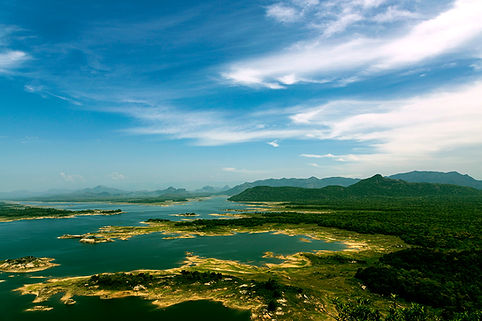
From a balcony overlooking a vast reservoir, the dry zone wind brushed against my skin, carrying a scent both familiar and ancestral, earth meeting sunlight, stone radiating heat, dust rising as if stirred by footsteps long faded.
Below, I watched an elephant crossing what now appears as scattered islands, landforms once towering as mountains, now submerged by the tides of development. Their softened peaks rest just above the waterline.
As the sun cast its fading light across this drowned geography, I found myself asking: what became of the people who once lived among those hills, in ritual conversation with the land?

Since childhood, I have returned to these landscapes, first as a traveler, later as a listener encountering members of the remaining forest-dwelling Vedda communities. In their stories, gestures, and quiet resilience, Dhāraṇī began to take form. Not simply as a fragrance, but as a living memory held in soil and substance. Dhāraṇī draws from terrains profoundly reshaped by colonization, displacement, and ecological rupture, from the British suppression of 1818 to the sweeping hydrological interventions of the Gal Oya and Mahaweli projects. Using earth and natural materials gathered from both ancestral Vedda homelands and their present-day settlements, I created layered soil slabs, each infused with the scent of rain-soaked ground. Embedded within these
surfaces are traces of traditional knowledge, materials once used in tools, healing, sustenance, and rituals.

This is not an act of preservation, but of invocation. Scent becomes a vessel of memory, a medium that transcends language and evokes ancestral knowing through breath and body. Dhāraṇī is a tactile and olfactory archive, where the materiality of earth speaks of resilience, rupture, and return. Sound is woven into this installation as an integral thread. A gently flowing soundscape carries ancestral voices and sounds from the surrounding landscapes of the Vedda, oral histories, lullabies, spoken reflections, and fragments of language gathered with care and consent. These are more than recordings; they are living echoes of what endures. As the scent lingers in the air, the sound awakens another form of memory, held in breath, rhythm, and reverence. Together, soil, scent, and sound create a multi-sensory altar of re-remembering and repair.

Audiences are invited to participate in workshops exploring their own ecological inheritances and displaced geographies. These shared contributions will shape a growing memory map, a ritual space for reconnection, recognition, and healing.
Dhāraṇī is part of Leela Bhūmi, a living, mobile project that moves between exhibition, workshop, and community gathering. It is a space where Indigenous epistemologies, ecological memory, and cultural heritage are not only remembered, but reawakened. In a time marked by climate collapse, cultural erasure, and the rapid forgetting of ancestral knowledge, this work offers a form of resistance, one that listens, tends, and begins to repair


![Leela Bhūmi [Playful Earth]The Listening Shrine | Vana Śruti (Forest Transmission)](https://static.wixstatic.com/media/96a97a_33f0f225a6604f2a91a437f50555ec28~mv2.jpg/v1/fill/w_980,h_653,al_c,q_85,usm_0.66_1.00_0.01,enc_avif,quality_auto/96a97a_33f0f225a6604f2a91a437f50555ec28~mv2.jpg)
Comments